Saturday, April 11, 2009

King Corn

For a movie that started out silly and fun, this was packed full of useful information. Another documentary that passes the good information without the drama.

Basically, it is the story of an acre of corn. These two men find that they have similar backgrounds in their family tree, and decide to go back to the place where their grandfathers lived and plant an acre of corn in Iowa. It follows them through 9 months of growing, harvesting, selling, processing and finding out where the products go. They even make High Fructose Corn Syrup... and then taste it. Blech!

Inspired by Michael Pollan's work, The Omnivores Dilemma, they are armed with all the right questions and the answers will make you laugh and cry at the way food is used in this country. Definitely gets my thumbs up.

Friday, April 10, 2009

An extract from the book Seasonal Food by Paul Waddington

Introduction

Life in Britain was once intimately entwined with the seasons. Our survival depended on a wealth of skills we developed to take advantage of the growing seasons and to deal with the barren winter. We learned when to plant and harvest to ensure fresh food was available for as long as possible. We knew exactly when wild foods were ready for the taking. And we learned to dry, salt, smoke, preserve and store food to keep us going through the lean times, or to take advantage of abundance. Our year turned to a cycle that was driven by the seasons, with the last autumn harvests heralding the end of the old year and the beginning of the new.

For many of us today, technology has reduced the seasons to little more than an aesthetic distraction. Heating and air-conditioning keep us comfortable all year round. Refrigeration, high-technology storage and a globalized food market mean that we can eat whatever we want, whenever we want. The year follows very different rhythms: the school year, the tax year, the financial year.

As a result, what awareness we have of food's seasons is diminishing rapidly. It has arguably been on the wane for hundreds of years, since a series of land enclosures starting in the 1500s began to reduce the amount of common land on which small farmers and labourers could grow food and raise livestock for themselves. By the late eighteenth century, when enclosures accelerated, many were forced off the land and into towns and cities, where, according to food historian Colin Spencer: "...under the slavery of long hours and pittance wages, their diet declined to bread, jam, tea and sugar." While we might think that junk food, far removed from nature's cycles, is a relatively recent phenomenon, it has in fact been a part of British life for hundreds of years.

As the first people to industrialize, Britons were the first to lose our connection with the land and the seasons. We regained it -- albeit briefly, and under duress -- in the Second World War, when the 'dig for victory' campaign had the whole nation growing its own food and in better health than at any other time in the twentieth century. After the war, though, the combination of agricultural subsidy and chemical farming severed this connection anew, and brought us to where we are today: a world of cheap, year-round abundance.

So should we care about the relationship between food and the seasons when it is no longer a matter of life and death; when we (in Britain at least) can eat what we want, when we want?

I believe we should. For a start, there's the simple fact that food tastes better in season. From spring lamb to asparagus, from apples to wild salmon, fresh, local produce is better to eat than food that has been raised artificially, or that has travelled halfway around the world in a controlled-atmosphere container. There are straightforward reasons for this. Take tomatoes. They like to grow in rich, well-composted soil and need good strong sun to ripen properly. The flavour of a good tomato is a result of the subtle interplay between nutritious soil and sunlight. So it should come as no surprise that 'fresh' tomatoes, planted in an artificial substrate and grown out of season in an air-conditioned greenhouse, taste of nothing much at all. Or take intensively farmed salmon, also available all year round. Fooled into growing by artificial light, drenched in chemicals, drugged up to the eyeballs and crammed into pens at densities of up to 20 kg per cubic metre, they are not in good shape when they reach the supermarket. Wild fish, on the other hand, caught in season, have reached a prime condition that results from a natural life cycle and are an infinitely superior product.

Of course we can get many foods all year round. But it's a treat and a privilege to eat them in season, because for much of the year, many foods are far from being at their best.

Then there's the question of how sustainable our approach to food production and consumption is. Our 'year-round abundance' has carried a heavy price. The problems of industrial agriculture -- from unhappy salmon to battery hens to pesticide-soaked vegetables -- are well documented and have provoked a surge in the sales of organic produce. This is to the good, because apart from giving us foods free from agrochemicals whose deleterious effects are thought to range from poorer child health to male infertility, organic production has many benefits. It promotes biodiversity and soil quality; it reduces the pollution of waterways and land. And most of the time it gives us food that is healthier, richer in nutrients and tastier.

But adherence to organic standards alone is not necessarily a sustainable way for us to consume food; nor does it guarantee a superior product. Flying in organic spring onions from Mexico and collecting them by car from a supermarket create 300 times more CO2 emissions than if they were grown locally and delivered by an organic box scheme. And they don't taste as good, either.
In a world where man-made climate change is becoming an urgent issue, what we eat is more than just a matter of taste. Buying in season encourages us to buy locally, whether from the farmers' market in town or the specialist sheep farmer who sells direct. Supermarkets may pride themselves on an ever-growing range of organic produce, but if a kilo of apples has made the flight from New Zealand in March, are they really going to taste as good as a well-stored late British variety? And if you accept that human activity contributes to climate change, is this worth the kilo of CO2 they will produce, compared to the 50g if the same kilo were bought locally? Despite the fact that we can grow perhaps the best apples in the world, Britain has lost 60 per cent of its apple orchards since 1970, thanks in part to bureaucratic madness that paid growers to dig them up. Buying locally and in season encourages local producers, who are building a more sustainable food industry, contributing to a renaissance in British produce and cuisine and creating a better environment.

Most of all, though, eating with the seasons brings a rich variety into our lives. Where's the fun in eating the same things all year round? By being closely aware of what's in season, you get twelve months' worth of gastronomic treats, and satisfying answers to the perpetual question of what to buy and cook for yourself, family and friends. Today, the nearest thing to a seasonal gastronomic event in Britain is the annual consumption of an oversized fowl, accompanied by miniature cabbages, about both of whose qualities many have, at best, ambivalent feelings.

The seasons have much more to offer than this. British produce gives us a huge range of reasons to celebrate throughout the year. From the autumnal abundance of fruit, game and vegetables to the spring treats of lamb, fresh greens and mackerel, there is (almost) always something good, fresh and locally produced for us to enjoy

However, unless we are enthusiasts, farmers, or live close to rural tradition, many of us have only a vestigial awareness of what's in season when. Regaining this knowledge is not easy. Chefs and food professionals tend to keep it to themselves, occasionally giving away tempting titbits in their recipes: 'And now, of course, is the perfect time to eat lobster!' Why? How do they know this? How do we get to know this?

The purpose of this book is to put comprehensive knowledge of food's seasons back in the hands of people who buy food. It's not a recipe book -- there are plenty of those already. Seasonal Food is a guidebook to what's in season when and why in Britain so you can eat produce at its best, contribute to a renaissance in local production, and simply revel in the variety of the seasons.


-------- © Paul Waddington 2004

For his book and a bit more about it, his website is here.

Tofu Red Curry with Mixed Braising Greens


The roasted root veggie toss was super simple. I just cut up a bunch of root veggies (in this case rutabaga, garnet yam, white baby potatoes, and chioggia beets) tossed them with olive oil, salt and pepper, covered them in a glass baking dish and baked at 350* for an hour.

Tofu Red Curry with Mixed Braised Greens

1 lg onion

1 Tbs grated ginger

1 pkg Extra- firm Tofu

6 oz braising greens (this was a mix from my local farm)

10 oz jar of red curry sauce from Trader Joe's

half a can of coconut milk

olive oil

salt and pepper

First, I sliced the tofu to the size that I wanted it. Then I pressed the tofu to get all the water out. It is best to do this for about 20 minutes, but in a pinch, you can do it for less. You take two layers of paper towels or cloth napkins and put the tofu on the towels on a baking sheet. Then place another layer of towels over the top and place another baking sheet on top... then weigh it down with whatever you have on hand. I used my blender. lol...

Get the oil nice and hot in your biggest saute pan. Place the pressed tofu in there and turn down to med heat. This will spatter because of the water in the tofu. You will want a spatter guard if you have it. Cook for about 5 minutes on either side. This makes the tofu nice and crisp, but chewy in the middle.

Take the tofu out of the pan and place it on a paper towel on a plate to drain the oil off.

Add the onion and ginger to the pan with the oil still in it from the tofu. When the onion starts to go clear, add in the braising greens. Spinach works well too, but will take a shorter time to cook so if you are using a mix, put the spinach in last. When all greens are limp, add in the whole jar of red curry sauce and the coconut milk.

Bring to a boil, and add back in the drained tofu. Mix until sauce covers all and is hot and yummy.

Option: If you want to spice it up, add a teaspoon of crushed red peppers in with the onions.

Local Living Tip #1


I am not claiming to be perfect at this... but I do have a few tips up my sleeve. :) In April, I have to say, it is close to the hardest time of year to live locally. Around here right now, the apples and pears are grainy and hard to eat when not cooked, the root veggies are starting to be questionable, and all other foods haven't quite grown to harvestable yet. We ARE getting some great salad mixes and braising mixes from the local farms, but for the most part, everything we are eating is from last year... or from far away.

The amazing thing about this time of year though is how fast things start coming to market. One week someone will have braising mix of really tough kale, tiny spinach, and mustard greens... and then the next week they have fresh salad mix, fresh herbs, and snow peas. The trick is to be there when that happens.

My routine is to go to the family farm store first. I actually go on Tuesday, when my menu is made and I have a fresh shopping list in my hand for the week. Before I go, I 'shop' from my own freezer and get the best of last years harvest into our meals as much as possible. Then comes the farm. I get everything I can from them. Currently, I am getting onions, shallots, red, white and even russet potatoes, apples, pears, leeks, yams, mixed braising greens, rutabaga, parsnips, beets, and fresh eggs. Last week they added cilantro, salad greens, and spinach. This added some great stuff to the menu! When I pay attention, I can make most of my meals from what they have, with a few exceptions for varieties sake, just by knowing what they have and what is coming into season. This gets even easier as the year goes on... but it isn't hard now. It just takes planning.

My next stop is Trader Joe's. Something akin to Whole Foods Market. Decent food, with decent ethics, sold by people who are paid a decent wage. Not all of it is organic... but I stick to the organics... and the sauces. This time of year, a good sauce can mean the difference between a bland and boring menu, and a culinary delight that your kids ask for over and over. This is also where I currently get my meat. I have lost the last of my contacts for local meats when we moved. Trader Joe's has 'no feedlot' beef and organic, free range chicken. They are large scale, which I would love to do without... but for now, I feel good about the meat we eat coming from there.

The last stop on my trip is Fred Meyers. I can, of course, drive to the co-op if I am feeling especially green... but even then, I think that the cost of the 30 miles of petrol probably off-sets whatever I am burning buying through a chain store. So Fred Meyers it is (it is about a mile from my house). It is surprising how much local produce is sold through chain stores. But because I get my local stuff through the farm, the main reason I go to Freddies is for organic dry goods. They have brown rice, organic whole wheat and spelt flours, unsulfered apricots and raisins, and many other things that I buy in bulk and fill my gallon jars when they need it.

The strategy of living locally first is one that I think would save a lot of our environmental grief. I don't personally believe that trade between states or countries is bad. I mean really, we have been trading grains for centuries. The spice trade dates back thousands of years. We were not damaging our planet by trading... what is damaging our planet is that many of us are unknowingly buying foods from 2000 miles away... foods that we could get from our own backyards.

For tonight's menu...

Roasted rutabaga, garnet yam, white baby potatoes, and chioggia beets (pic above)
fried tofu over braised winter greens and onions
slathered all over with red curry sauce and coconut milk

Friday, March 20, 2009

Gardening book

Fresh from the Garden Cookbook

This is a book my best friend and I have been looking for for quite a while. We both absolutely LOVED Animal, Vegetable, Miracle by Barbra Kingsolver, but we also were frustrated that although all of her ideas were great, most were for the area she was in... which is far from here. Makes perfect sense as she was writing about local living. lol... But makes it difficult to implement for the beautiful Pacific NW. Well, this author, Ann Lovejoy, writes just for the Pacific NW... in fact, she lives up on an island about an hour from here and the area is her muse. Recipes, stories, different little tips on how to grow year round... and all for right here in my area. This is a book I will have to own.

I keep wanting to know if she is related to Sharon Lovejoy, my favorite children's garden author.

Monday, March 16, 2009

McLibel

This movie is all about a real legal battle between two people and a HUGE corporation. It was interesting, but definitely a documentary. This law suit, however, changed the legal system in the UK and started the recession of the largest food chain in the world, so personally I thought it very worth watching and I enjoyed it very much.

Alex watched it with me and was appalled at the portion that talked about McDonald's animal cruelty... He has decided never to eat there again. Not even if someone takes him there. I don't know if that will stand the test of time or not, but since I was vegetarian by my own right my entire childhood (until 23)... It could happen.

I recommend this movie for those of us who want to know the ins and outs of the food industry, but it isn't light watching. I wouldn't even say it was light, like Super Size Me was 'light'. It was one of those courtroom dramas, that sometimes is better read in a short summery than watching an 1.5 hr documentary about.

Speaking of which... the short summery is here:


In the video cometary there is a interview scattered throughout from Eric Slosser (author of Fast Food Nation) that brings up lots of interesting facts and support. I found that these scattered interviews (there were many more people who supported them as well, he was just the one I knew the best) were very helpful at understanding all the legal jargon.

Super Size Me

What did I do all day? I cleaned my house and watched anti fast food propaganda. lol!

This is the third time I have seen this film, but I watched it twice in close secession when it first came out and then now (which is 5 years later). It is amazing what time has done to this movement... and I still find it amazing what happened to a really healthy guy in just a month of that crap. If there was ever a boost to the slow food movement it has been the two films I watched today. They are SCARY.

This is a must see... I wouldn't just say for adults either. Although Alex is more interested in the disgusting animal treatment going on to produce fast food, it wasn't lost on him at all that it is terrible for you... and for the environment. In fact, after watching McLibel he kept asking me "Then why is there STILL McDonald's like EVERYWHERE!?!"

The other impact that I hadn't put together before was the commercialism of the food industry. I have to admit that not having cable has made me sort of oblivious to the commercial industry. In Alex's lifetime, we have had cable television for less than a year total. But that doesn't make me insusceptible to their little ploys. Until half way through the Super Size Me movie, I was craving junk food. I got up, got myself two homemade WW Sugar Cookies and a tiny bowl of veggie chili I made the other day. After I wasn't hungry at all, the effects were nill... which was helped by Morgan throwing up McD's all over the side of his car half way through the movie. But when I was hungry, fast food was all I could think about. Sad sad sad the way these commercials effect you... even when they are part of a educational parody!

BTW, both of these movies are available on direct watch from Netflix. No mail necessary.

Monday, March 9, 2009

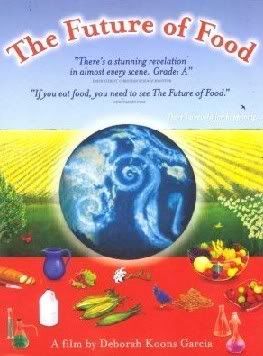
The Future of Food

This movie is an eye opener. I know a LOT about food. But this movie was talking about something I had never even really thought of... What would happen if some company patented all the seeds for our food? It is scary stuff, let me tell you.

Basically the video takes you through the last 35 years of seed science. It talks about how seeds are germinated and the beginning of Genetically Modified seeds. It shows you actually farmers that were saving their seeds and using them to grow the next years crops all over the world. Mexico, Canada, and the United States especially. Then it explains about how GM seeds work, and how you can track GM seeds through their genes to find which farmer uses which brand and what pesticides that each selection is going to be able to withstand to make herbicide use very easy on farmers. Then it goes on to talk about how Monsanto has started suing the farmers that are close to areas where Monsanto seeds have been used because their crops have the Monsanto gene... but they never used Monsanto seed... their crops just happened to be pollinated by bees that flew in from Monsanto crop areas. Then they go on to interview everyone they can get their hands on that would have an opinion.

Fascinating stuff, I tell you... scary and fascinating.

What was the answer? Buy local, buy organic, grow your own when you can, save seeds, support people who grow their own and save seeds, support organic and local. Don said when the movie was over "Val, you like watching things that tell you you are doing it right." I had no idea that Don would be right, however. I honestly didn't really know what this movie was about except it concentrated on big agribusiness and Monsanto Seed Co and how they were evil and bad for the whole world.

I think the worst of it, is you can't even see Monsanto on anything you buy in the store. They don't market under that name, they have a hundred different companies that market and package for them. It makes it that much more important to know where our seeds come from, to know where our food comes from, and to develop a real relationship with the people who grow it. As much as I love CA for the oranges and the tomatoes I am currently eating to stay healthy in the winter, I will be very happy to switch back to my local growers when the season changes.

Sunday, March 8, 2009

Hot Cocoa from Scratch

I was thinking today was a good day for cocoa... being March and it snowing and all. So I pulled down my baking supplies because we were out of the crazy spendy Organic Hot Chocolate we usually buy, and I decided to make up a recipe for hot cocoa from bakers chocolate.

Bakers Hot Cocoa

4 cups whole milk
2 squares simisweet bakers chocolate (I am sure you can use chocolate chips as well for this bit... just use 1/3 cup)
2 Tbs sugar
1/2 tea vanilla
1/2 tea cinnamon

Put all ingredients into a small sauce pan and heat, but do not boil. As it cools there will be some chocolate 'scum' as my daughter calls it on the top of your cocoa cup, but it is just chocolate and it tasted wonderful as well. The joy of the lack of soy emusifiers.

It turned out VERY good!

Sunday, February 15, 2009

A lesson in Orange


Three weeks ago I started a winter organics produce subscription. The Farmers Markets are closed until April around here, and we have been seriously lacking in fruits and veggies. I have frozen tons from our harvest season, but fresh fruit is something that you crave in this cold, wet, dreary climate. I subscribe to two boxes from these folks: Terra Organics Every other week I get a box of Pacific NW only produce... all grown here in Washington or Oregon state... and then every other week I get a box of fruit.

The fruit has been our favorite so far. The Pacific NW box is convenient... but there is nothing like having fresh organic strawberries from CA on Valentine's day, or 4 lbs of oranges and tangerines to make OJ out of the day after. The fruit box is not necessarily local, but they do keep even winter produce to the west coast and that is about as good as I can do shopping for myself in the store.

I feel really grateful for California this time of year. I am a local girl... but goodness... that OJ tasted GOOD!