Showing posts with label organics. Show all posts

Monday, June 29, 2009

Local Living Days

Since my big market days are Sundays, I have an overabundance of good food come Monday morning. I came home with two bunches of carrots, a bag of summer squash and baby turnips, two heads of beautiful lettuce, a bunch of spinach, cilantro, parsley, 1 lb of garlic scapes (see pic at bottom), and 1 pound each Rainer and Bing cherries. And of course this:


I got STRAWBERRIES! After a long market day yesterday, my husband and I sat in front of a movie and topped, washed, and bagged 3 full flats of tiny, sweet, organic strawberries. I sigh with happiness just thinking about it. So good! There are a smaller variety that they grow at the farm I work for... they are more flavorful than any other strawberry I have ever tasted. They are sweet too... not like those ones you buy from the store (You know... the ones that taste like strawberry flavored cardboard). Those cold winter days where all I need is a taste of summer... they will be so much sweeter with these babies packed away.

Monday, June 22, 2009

A good first market day

A few people have asked me lately why I work on Sundays at the market. I figured it may be a relevant question to answer on the blog. :)

First off: I love it. Working with a great friend for a place that I trust, love, and believe in... I don't know that there can be a better reason to have a job (when you don't need to have one, that is).

Second: I love the connection and the 'me' time. I get to be without the kids. I am a homeschooler with a husband who has a crazy (and heavy) schedule, who doesn't really have hobbies outside of the home. Even when I am working out at the gym I usually have one of the kids with me. So this is a great opportunity for me to get out and talk to adults like adults. lol... and that is very rare in my world.

Third: A connection to local food and seeing people that have similar life beliefs that I do. This is a big deal for me. It has been hard moving so much and not knowing where my niches were in the community I am in. I am not sure how to describe this one. But I just don't know where my place is in this community yet. I am not talking about friends.... but finding stores I share values with, seeing farms that I trust and love... well I am just not there yet where we are. And that has been harder than I care to admit. We are a bit outside the norm in our beliefs. (As I believe really everyone is.) Even in my house, I have to stand hard for the things I believe are right to get them into action. (My dh is less than crunchy.) A melding is required and sometimes that take inspiration and a bit of a reminder that I am not crazy.

Fourth: Well, the haul is nice. lol! Yesterday I came home with what is in the picture above:

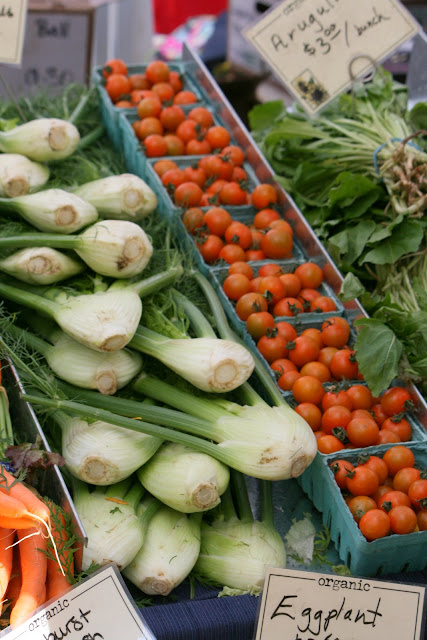
From the organic farm I work for: Dill, cilantro, 2# shelling peas, 1# sugar snap peas, 2 bunches Tatsoi (an Asian green similar to spinach mixed with bok choy),1 bunch spinach, 2 bunches Asian broccoli, 4 heads various lettuces, and a pint of the best strawberries EVER.

From other vendors (which I traded leftover veggies from the farm): 1 dozen free range organic eggs (and really free range, not store bought free range... think; happy chickens.), a huge loaf of Turkish Lavash bread (think huge croissant), a pint of raspberries, a bunch of carrots.

And I spent actual money on 4 succulent plants that we had already put outside in this picture.

Just think of an opportunity to get all of the above for $10 out of a paycheck you make doing what you love? Yes... that is why I do this job.

Wednesday, June 17, 2009

Fast Food For Foodies

So lately, I have been talking a lot about the move. Of course. lol... it is my world. And the house is turning out to be more wonderful than I could possibly imagine. But along with doing all of these things to the house, I have had to make food. Lots of food, as fast as possible, because you will not believe how you loose track of time when I am painting, or putting up pictures, or planning shelves. Hours can be lost in what feels like minutes when one is so absorbed in something like this.

Enter Fast Food For Foodies. I love food. Well, I love good food. Real fast food (the 'real' being completely subjective) makes me sick. And most of the time I am glad, but sometimes I wish I could survive on Whoppers... No I don't. Never mind. YUCK! But you know what I mean. The drive through convinces can't be beat when you are harried for time. Luckily for me, it is summer. And that makes finding decent good and fresh food relatively easy.

My main staples for quick and easy meals are as follows:

Fruit salad. Fruit salad is easy to make (esp if you have a melon baller) and I keep some in the fridge right now at all times. We don't have local melons yet, but a watermelon added to some local strawberries and some frozen blueberries from last year make a great salad and keeps for about two days in the fridge.

Crackers and cheese. Oh how I love thee... but I usually have a spin on it. Like the dish above. Brie, crackers, and cherry tomatoes from the store, and basil from my garden (*glee*). A wonderful spin on the old stand by for a quick meal that will please just about anybody (except my toddler, who spits it out and makes horrid faces that make it seem like eating brie is torture).


For toddler fast food (which means every one including the toddler love it) around here we have;

~ Frozen blueberries - right out of the bag. We used to have frozen strawberries too, but Logan is allergic.

~ Frozen grapes. Organic grapes are EXPENSIVE! I paid up to $9 for a bag of them before I stopped buying them altogether. So when these babies go on sale, I want them to last a while. Enter my freezer. Who knew? Frozen grapes are delicious. I actually like green grapes this way and I am a die hard red grape fan. ;)

~ Frozen organic yogurt squeezes and organic apple sauces squeezes. Ever wanted an healthy alternative to Otter Pops? Here they are! Find them on sale and buy a bunch! Frozen they keep for months and months.

~ Baked potatoes - Any potatoes... yams esp. Our local farm right here in town always has yams and small red potatoes. And all locally grown. Butter and salt is all he eats on yams. Regular potatoes and he will have a whole meal with cheese, sometimes sauteed onions, sometimes bacon, and usually chives from my garden (MY garden!!!).

~ Cold rice - I make up a big pot of fried rice or comfort rice and usually don't even have to heat it up... just add spoon.

There has never been a better time to get into a good food habit than now. I'll be frank... avoiding fast food takes more work. It just does. There is no if, and, or but about it. Packing food, remembering to bring food, keeping it cold and stored well... it adds up to a bit more work. And if you want to go organic, it takes a bit more money too. But you can find coupons for these things pretty easily, and as the market starts to expand, it will get even easier. The benefits far outweigh the pitfalls. Consider it health insurance for your children. It is more than worth it.

Friday, April 24, 2009

Soy estrogen, and Boys

A few people have asked me lately about soy estrogen and boys. A couple years back, the estrogen in soy was all the rage and it was said that boys were not really supposed to eat soy at all. This scare came right around the same time that they came out with the chickenless nugget, and the whole super-processed soy craze started. The truth is, yes, there is estrogen in soy. If your family eats obscene amounts of soy products and happen to have a little boy it could effect his growth and development. But frankly, if your family eats obscene amounts of anything it could effect a child's development.

When I was 9 months old, I decided (on my own) that I wanted to eat nothing but mashed carrots and sweet potatoes. My mom says she could occasionally push some oatmeal with molasses down me, but for the most part, I ate mashed sweet potatoes and carrots breakfast, lunch and dinner. About 3 weeks later, she noticed that I was a little bit yellow around my lips and nose. Then, she noticed it in my fingertips and eyelids. She was alarmed of course, because discoloration of that kind is a sure warning sign for Jaundice. So, she took me to the Dr. and after careful and close examination the Dr asked her, point blank, "What the hell are you feeding this kid?" When she explained my new found love of sweet potatoes and carrots it all came clear. I wasn't turning yellow... I was turning ORANGE.

Soy is just the same. If your diet consists of a large range of things, but you happen to have tofu 3 nights a week for dinner... this most likely will not effect your boys development. In fact, I will go so far as to say that it will be healthier than the hormone fed chicken or beef you could be giving him instead. On the other hand, if he has a big glass of soy milk in the morning, soy milk in his cereal, chickenless nuggets with french fries fried in soybean oil for lunch, and Boca burger on a white bread bun for dinner... well, yes. Your child may have a problem. You may flood his system with soy and it may start to effect his development. No one was made to eat one plant that much.

In our society, you can get anything you want... anything... made from corn or soy. In fact, your entire diet could be based on corn and soy and unless you are paying attention, you wouldn't even know it! Most fast food eaters do not understand that nearly everything they are eating is corn. Every bit of it. The corn fed beef and chicken, the french fries cooked in corn oil and made with modified corn starch to hold them together, the high fructose corn syrup that makes up more than three quarters of their 36 oz soft drink. All of it. Corn.

Our bodies were not meant to eat anything this way.

But back to soy. It is important to not demonise a food for the way people use it. Soy beans are legumes. They are a wonderful source of amino acids that make up proteins just as the average pinto bean or black bean is. Eaten with rice, they make a complex protein that is usually very important for the vegan or vegetarian diet. It isn't a food to ignore or avoid unless it has been tampered with beyond recognition by humans.

A moment for GMO's. GMO stands for Genetically Modified Organism. They are flooding our food chains right now. To the GMO corn to feed the cattle (that, FYI, are not supposed to eat corn in the first place) to the GMO soybean oil to fry our potato chips and french fries in. I wish that I could say that they genetically modify these foods to make them more nutritious... to make them better for you... but they don't. They modify these foods to make them resistant to poison. So they can pour copious amounts of whatever poison they want on the fields in which our food is grown, killing everything else living and leave perfectly 'healthy' soy and corn plants behind. Scary? You bet! If this is something you would like to avoid, here is a handy shopping list to help you. *Shopping list*

When you are buying your soy foods, these three questions will help you determine if it is safe or not:
  1. Does it have label saying "no GMO's" or "Organic" (which by Federal law can not have GMO's)?
  2. Are you eating many other foods with your soy products that are not made from soy?
  3. Is it a food that is unique to soy, like miso or tofu? (Just a tip, soy beans do not have mammary glands).

If the answers are 'yes', 'yes', and 'yes', then honestly, you are probably fine to feed this to your family without fear or side effects.

Friday, April 10, 2009

Local Living Tip #1


I am not claiming to be perfect at this... but I do have a few tips up my sleeve. :) In April, I have to say, it is close to the hardest time of year to live locally. Around here right now, the apples and pears are grainy and hard to eat when not cooked, the root veggies are starting to be questionable, and all other foods haven't quite grown to harvestable yet. We ARE getting some great salad mixes and braising mixes from the local farms, but for the most part, everything we are eating is from last year... or from far away.

The amazing thing about this time of year though is how fast things start coming to market. One week someone will have braising mix of really tough kale, tiny spinach, and mustard greens... and then the next week they have fresh salad mix, fresh herbs, and snow peas. The trick is to be there when that happens.

My routine is to go to the family farm store first. I actually go on Tuesday, when my menu is made and I have a fresh shopping list in my hand for the week. Before I go, I 'shop' from my own freezer and get the best of last years harvest into our meals as much as possible. Then comes the farm. I get everything I can from them. Currently, I am getting onions, shallots, red, white and even russet potatoes, apples, pears, leeks, yams, mixed braising greens, rutabaga, parsnips, beets, and fresh eggs. Last week they added cilantro, salad greens, and spinach. This added some great stuff to the menu! When I pay attention, I can make most of my meals from what they have, with a few exceptions for varieties sake, just by knowing what they have and what is coming into season. This gets even easier as the year goes on... but it isn't hard now. It just takes planning.

My next stop is Trader Joe's. Something akin to Whole Foods Market. Decent food, with decent ethics, sold by people who are paid a decent wage. Not all of it is organic... but I stick to the organics... and the sauces. This time of year, a good sauce can mean the difference between a bland and boring menu, and a culinary delight that your kids ask for over and over. This is also where I currently get my meat. I have lost the last of my contacts for local meats when we moved. Trader Joe's has 'no feedlot' beef and organic, free range chicken. They are large scale, which I would love to do without... but for now, I feel good about the meat we eat coming from there.

The last stop on my trip is Fred Meyers. I can, of course, drive to the co-op if I am feeling especially green... but even then, I think that the cost of the 30 miles of petrol probably off-sets whatever I am burning buying through a chain store. So Fred Meyers it is (it is about a mile from my house). It is surprising how much local produce is sold through chain stores. But because I get my local stuff through the farm, the main reason I go to Freddies is for organic dry goods. They have brown rice, organic whole wheat and spelt flours, unsulfered apricots and raisins, and many other things that I buy in bulk and fill my gallon jars when they need it.

The strategy of living locally first is one that I think would save a lot of our environmental grief. I don't personally believe that trade between states or countries is bad. I mean really, we have been trading grains for centuries. The spice trade dates back thousands of years. We were not damaging our planet by trading... what is damaging our planet is that many of us are unknowingly buying foods from 2000 miles away... foods that we could get from our own backyards.

For tonight's menu...

Roasted rutabaga, garnet yam, white baby potatoes, and chioggia beets (pic above)
fried tofu over braised winter greens and onions
slathered all over with red curry sauce and coconut milk

Sunday, February 15, 2009

A lesson in Orange


Three weeks ago I started a winter organics produce subscription. The Farmers Markets are closed until April around here, and we have been seriously lacking in fruits and veggies. I have frozen tons from our harvest season, but fresh fruit is something that you crave in this cold, wet, dreary climate. I subscribe to two boxes from these folks: Terra Organics Every other week I get a box of Pacific NW only produce... all grown here in Washington or Oregon state... and then every other week I get a box of fruit.

The fruit has been our favorite so far. The Pacific NW box is convenient... but there is nothing like having fresh organic strawberries from CA on Valentine's day, or 4 lbs of oranges and tangerines to make OJ out of the day after. The fruit box is not necessarily local, but they do keep even winter produce to the west coast and that is about as good as I can do shopping for myself in the store.

I feel really grateful for California this time of year. I am a local girl... but goodness... that OJ tasted GOOD!

Sunday, December 14, 2008

Cold market day... hot root vegetables.

There was a day, back in late September, that while I was working, it started pouring down rain. It doesn't take long, while moving lots of leafy vegetables around to get soaking wet, and of course, it was September... who wears a waterproof warm coat in September?

I got very wet. I got very cold. I soon after got pretty sick. It was a long and sucky day, and I felt like I hadn't even done my job well because I was miserable enough to have it effect everything I did... even count money. lol...

Yesterday was so much worse it knocked that day right off the radar.

Yesterday, as it started to get light outside I realised that it was going to be a cold and windy day. The bank on the corner said "27*". But it was still dark... surely it would warm up... I had packed warm clothes, tons of layers, and thought I was prepared. Little did I know that it would never get above freezing and I would be standing in the wind.

My right glove got wet about an hour into the market day (11am), and froze to my hand, giving me frost burns. The table cloths froze to the tables. The little droplets that were water back at the farm were ice crystals that never melted as we were putting out the kale, chard and mizuna. And it just got colder.

My brother picked me up at 4:30 and it was 26* outside. I was frozen to the bone. I spent the better part of the day finding excuses to go into stores and defrost... which of course just made the cold worse when I went back out. I can't even imagine how my market partner was standing it, but she disappeared half the amount of times I did. It was crazy.

But beauty out of that crazy ice:


The last of the years veggies have arrived. This miserable cold spell has taken all the life that was left in the ground and frozen it solid. Ok, that is a bit dramatic, but that is what it has done. The ground is frozen, so that means so are most of the things that don't mind the more mild colds of our climate. This was the last week for local cilantro, lettuce, chard, mizuna, broccoli, cabbage, most herbs, and onions. It may be the last time we have leeks, kale, beets, and potatoes... depending on how long this cold spell lasts. The season is finally over. *sigh*

And another will start again in a few months.

As much as I hate to say it. Thank you California. Thank you for making it so we don't have to stop and think about this season being over today and we can just go on living our lifestyles as we choose. I am not thinking about whether we have enough food to last the winter. Or whether my root cellar is deep enough so my potatoes, apples, beets, onions, garlic, etc doesn't freeze. California makes most of this possible to be something you pick up from the store on a weekly basis. You don't have to think about where or who it came from... because in the land of green pastures, far far away, there will always be garlic and potatoes growing on abundant grassy fields.

Oh wait...

Monday, September 15, 2008

Market Work

Working the market has been interesting. People in Seattle are dedicated enough to eating organic that they just don’t think about the price… but wow. Our stuff is SPENDY. $2.50/lb for potatoes (damned good potatoes which are COMPLETELY worth it, but until you spend the money to try them, who would know?) $1.50/lb for the biggest cauliflower you have ever seen (and they are pretty and delicious too) but that means spending $6 for a cauliflower that is three times bigger than you really wanted, and then of course, $4/lb for the best green beans and peas you have ever tasted. What it means to be beyond organic is pretty amazing. The industrial organics can sell the ¼ of their stock (which are probably the ones that don’t quite fit into the mainstream idea of what the veggie is supposed to look like….) And they sell them to soup companies that want to claim ‘organic’ and still have plenty for every single whole sale order they have. We don’t have that luxury. We have to sell the 5lbers, right along with the 2lbers that we know everyone will buy.

Anyway… it has been interesting.

Yesterday I came home with a big box of food from the farm. I had one huge cauliflower, a 2lb bag of green sugar snap peas, 5 cukes, two bunches leeks, 5 onions, 4lbs potatoes, a bunch of carrots, a bunch of red chard, two tiny romenesca, two bunches cilantro, one bunch dill, one bunch mint, and a half lb wild Chantalle mushrooms. At the end of the day, the guy next door to us at the market traded for two half pints of fresh local ice cream, (one of which will be gracing my kids bellies after lunch), another neighbor traded for some bone broth for me and some fresh cows cream cheese which Hannah took home. And yet another neighbor traded for pastries for a snack. And on top of all of that, I got sent home with an entire case of sunflowers that we had left over, and wouldn't last until the Tuesday Market, which Cyan graced all of our neighbors with bouquets before we ate dinner.
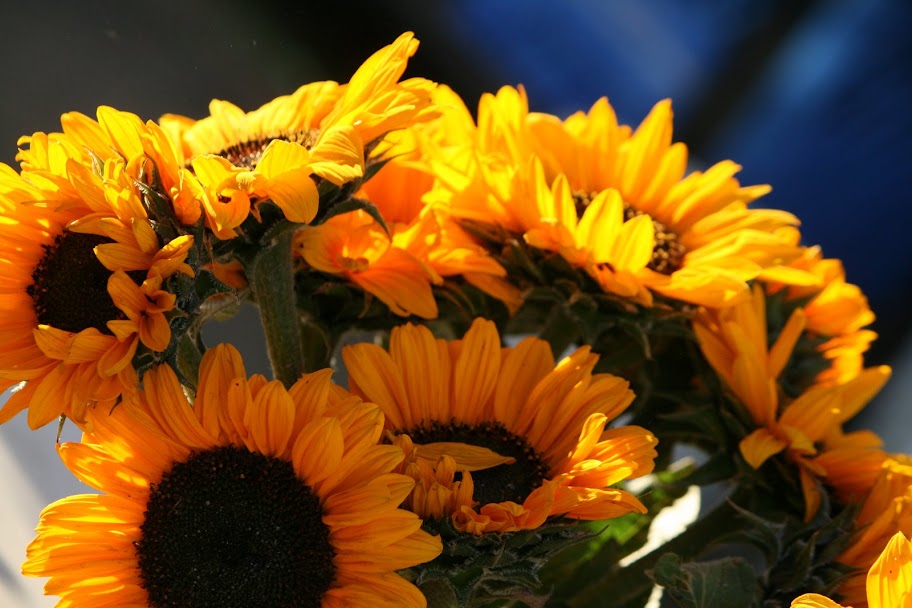
This is an abnormal weekend. I normally get about half this much... but even so... I got paid on top of that (considering the time I spend and how long it takes to get there, my wages work out to under $7 an hour), but when you count all of the trades/veggies from the farm on top of it, well, it is a really good deal. I feel strange when people complain about jobs like this. I feel as though I have a special advantage as I can get as much as I want for my family for a week… and I guess when you are a single gal, the appeal of a weeks worth of veggies isn’t that high because you don’t need near as many of them. The veggies and trades I got were worth quite a bit more than I got paid in cash. I work my menu for the week around what we have at the market. This means that we have had potato-leek soup twice in the last two weeks and I am going to make it again this week. It means that I have peas the entire season, and by now, my kids are sick of them and I am forced to freeze whatever we are bringing home. But it also means that nothing has ever sat anywhere (no truck, fridge, box or shelf) for more than a day. I don't know... maybe I am weird... but that just has to be good for you.

Saturday, September 13, 2008

Local Living can be easy

It isn't always. But in September, local living is easy. Farmers markets are packed to the brim with ways to get everything you need, from fish, veggies and fruits for dinner, to toys for Christmas, and flowers for your dining room table, along with other necessities like soap and fresh baked bread. The amount of local bounty I see go past my stand every Sunday just amazes me! I got a lot of my things local before. But I had no idea how much was out there, processed or grown within 200 miles of my house is everything I need from home baked pies to fresh peanuts from just over the mountains.

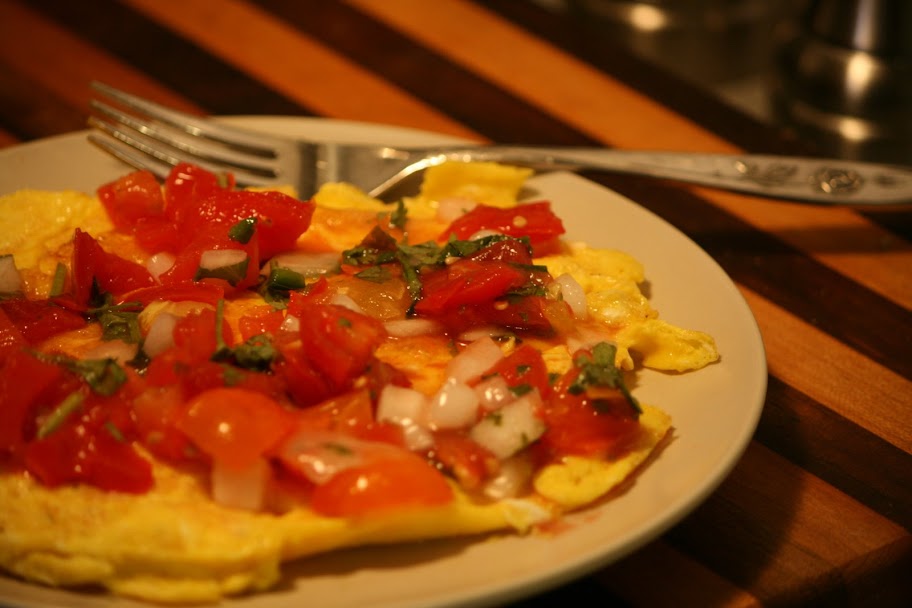
The omelet above? Eggs from my chickens (of course) with Pico De Gallo made from tomatoes from my garden, onions, garlic, and cilantro from the farm, and a token jalapeno pepper from the neighbors farm stand at the market.

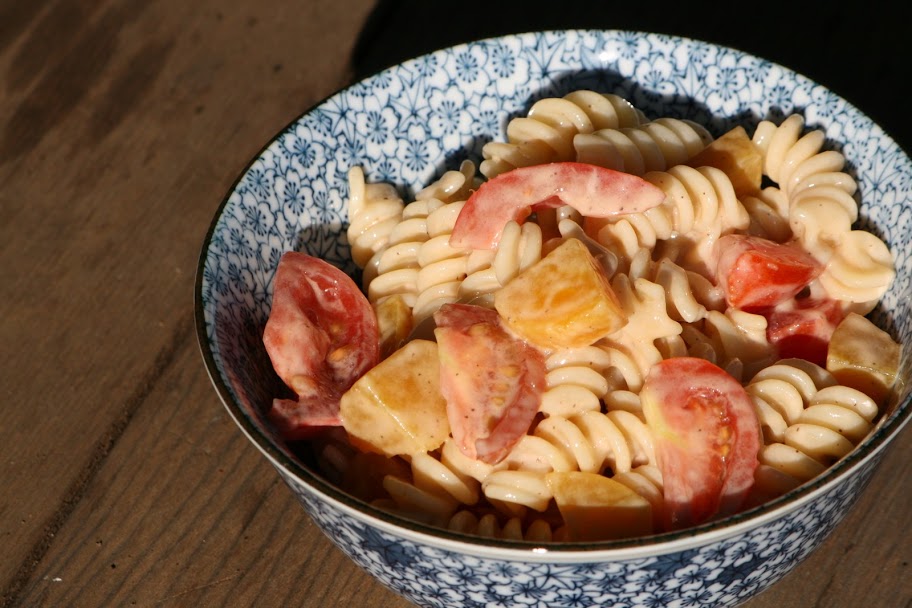
The above is not 100% local. The organic, single ingredient pasta that I have come to depend on for my husbands dietary 'needs' comes from Italy... and the balsamic vinaigrette came from California, but the rest? The goat cheese, the tomatoes (my gardens only real produce this year), and the beautiful golden beets from the farm are all amazingly from within 40 miles of my house.

Sweet and Tangy Pasta Salad

1/4 lb golden beets (red beets will do, but I don't like the way they stain everything pink)

1 lb tomatoes (plum or cherry work best)

2/3 cup balsamic vinaigrette dressing (I use Paul Newman's)

4 oz soft goat cheese

1 lb rotini pasta (WW would work well here)

Directions:

Cook pasta until al dente. Drain and douse with cold water reduce sticking.

Steam beets until fork tender. Slice tomatoes into bite sizes.

Add in the cheese and dressing, saving veggies for last. Toss with veggies (feel free to add others too! Baby spinach would be good tossed in, as would a host of other greens).

Eat cold.

Serves 4

~~~~~~~~~~~~~~~~~~~~~~~~~~~~~~~~~~~~~

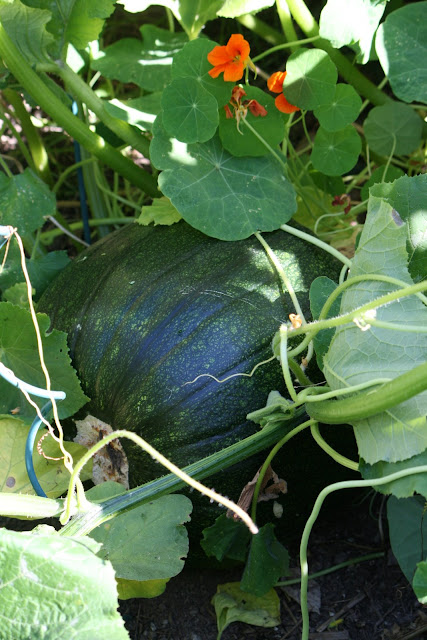
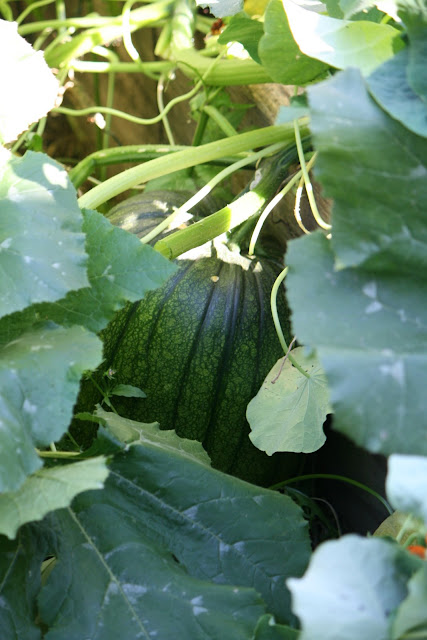
A surprise in the garden! You remember that volunteer pumpkin that I was ranting about a few months ago? Well, it looks like we may actually get two jack-o-lantern pumpkins out of it!


Gardening is always a journey.

Monday, August 25, 2008

The big food budget debate

Once again, our budget was overrun by the food budget. We spend WAY too much on food. It is insane considering that we get half our food for free and I make enough that we really honestly shouldn't EVER be eating on Don's paycheck at all. But yet, we did. YIKES!

So in comes the budgeting, and the recipe filing, and the planning with ways to save in that area.

I have gotten some really wonderful ideas from these two ladies.


This is a whole foods website that does about 4 recipes a week. Each and every one is whole foods. Many are dairy free and vegan as well. She does a great job posting the shopping list for the following week at the start so you don't have to wonder whether or not you have enough Agave Nectar to make all four recipes this week. Many recipes are "out there", but I find myself very compelled to try them out. It is a wonderful format and I can't wait to search through her recipes and find new favorites, which I am sure to with beauties like Walnut Banana Muffins.


This lady is very special in my life. Not only is she constant inspiration for me in many ways, but she also happens to be my best friend. :) She and our other dear friend Heather came up with this amazing binder idea for food recipes. I think it is brilliant! I haven't yet tried to figure out how to do this on a local diet, but it is worth a try as it would make meal planning SO much easier!

I also just got the book "In Defense of Food" by Micheal Pollan (the author of "The Omnivore's Dilemma") from the library and I can't wait to dig in and get back into food on the intellectual level as well. The first line makes a great start for a good conversation:

"Eat food. Not too much. Mostly plants."

Yep.

Sunday, June 29, 2008

Lemon Tahini Dressing


My favorite local eatery, which also has a fair trade market attached to it, has this amazing salad. They serve it heaped with brown rice, on top of a bed of romaine lettuce and then tomato slices and cucumber to top it all off, and usually next to this amazing panini sandwich made with roast tomatoes and tons of provalone cheese! Yum!! The dressing they use, they gave me the recipe for years ago... but to make a gallon. lol... so I rarely bother figure it out. And because I make so much at one time, I never have written it down in smaller quantities.

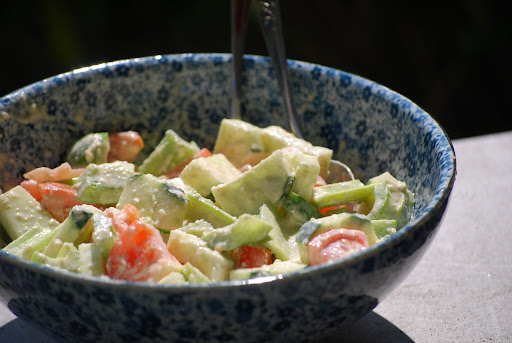
I have been reading about food again. Seriously, it is beginning to be a real, full-on, life long, obsession. I have also been following my diet very closely, and documenting what is working for me and what is not with the nips and twitches that my picky body puts out. The book I am currently in is Sally Falon's Nourishing Traditions. Amazing book. Brings to life everything I have ever believed about food. Partially I love it because it backs up much of my instinct and knowledge, and partly I love it because the recipes are GOOD! And all real food, made with real fat, real ingredients, and really 'from scratch'. Many are even easy. She doesn't shun things like food processors, or crock pots, she just uses them as our ancestors would have... to make 'real' food. I found a recipe in it for a half quart of Tahini Salad Dressing, that reminds me so of the dressing from that eatery I love so much I am nearly sure that is where they got the idea. Theirs has more salt, and a bit more lemon juice and celery than she calls for... but adjusting for taste, it is the same thing. So here it is... This yummy dressing is great over cucumbers right out of the garden for those of you a few months ahead of us (my cuke plants are 2 inches tall) or even as a dip for cuke slices. It is also great as a dressing inside a wrap loaded with yummy veggies and perhaps some light cheese as well. Use your imagination... it could go with anything crisp and satisfying these dog days of summer.

Lemon Tahini Dressing

1 small onion
1 stalk celery
2 T soy sauce
fresh juice of 2 lemons
1/2 c Tahini
4 T olive oil
1/8 cup water

Chop onion and celery coarsely, and put in a food processor or blender until finely chopped. Add remaining ingredients and process until well blended. Thin with a little water to achieve desired consistency.

Oh, and I still adore my bowls. I love getting them out of the cupboard and using them, I love planning things to put in the serving bowl. All of it. I know, I am a dork, but I really really love them. :)

Wednesday, March 19, 2008

Big Farms vs Small Farms

Big Farming VS Little Farming

There are a LOT of ideas in these areas coming to light lately. In Omnivore's Dilemma, Micheal Pollen talks about this a bunch. His stance is that big farms are pretty necessary. We wouldn't have populated places where there isn't farm land without them. Think; people who live in Phoenix, AZ. The plant and animal bio-diversity there is severely limited by the lack of water and the lack of soil. People there are constantly shipping in foods just to survive. Without the large farms, people couldn't live in parts of our country that are heavily populated... but what about the impact?

The biggest impact of huge farms is Mono Cropping. Mono Cropping, in a nutshell, is planting the same thing, on the same land, over and over and over again. Thus having to put in nutrients that the soil lacks each year by artificial means to keep the crop that has depleted the soil of those same nutrients, growing there. 90% of the time, they do this with chemicals. Many of these chemicals are leached into the water table beneath these huge farms because the soil is barren and dry for the part of the year that the crops are NOT producing there. There is no reason to plant cover crops (which would replace some of these nutrients) with the chemicals so readily available, and there is no reason to crop rotate if you know that whatever your soil is lacking, you can just add chemical #1 from this box, and chemical #2 from this box and call it good. It is cheaper, faster, and takes MUCH less work.

The largest mono crops in this country are soybeans and corn. Usually not even grown for human consumption, but for cattle and livestock feed. But that is another post all together.

Every single gardening book I have (not just the ones that are for 'organic' or 'beyond organic' gardening) recommends crop rotation and cover crops if you have a large part of unused land. These things are vital to keeping the soil healthy. They bring back nutrients, and if you are careful, can even yield you another full crop! Yet, many (I dare say 'most') large farms have stopped doing this. Trucking in manure and planting legumes to overwinter seems out of the question on a large scale... but for the back yard gardener it is essential.


Big Organics VS Big "Conventional"

Using the word "conventional" here annoys me. The conventional way of growing has only been 'conventional' for less than 75 years. When talking about the history of farming, that doesn't seem to be long enough to set it as the "conventional" methods. But I digress....

Big organics are forced (and most willingly) to be more sustainable than their conventional counterparts. They use animal manure (usually organic as well) to supply the nutrients that their crops have used up. Some even still use cover crops for their needs as well, making them as efficient as many smaller organic farms (where it is the norm to do both of these things). So when asked if big organic is better than big conventional, the answer is a resounding YES! The more big organic companies are supported, the few chemicals are put into our soil and the more soil is used sustainably. But I say that with a bit of hesitation because big organic still is monocropping. Many large organic companies have one or two crops. This inhibits the biodiversity of an area, and that, as much as we can see now, is not the best for the environment.

Here is something I picked up from Wikipedia on the topic:

Proponents of organic farming say that "conventional" farming is unsustainable, because it relies on artificial inputs (synthetic fertilizers and other chemicals, machinery, etc.) that ultimately requires energy in the form of fossil fuels, and because the land is degraded through soil erosion, salinization, and other processes that eventually render the soil infertile. Many claim that without cheap fossil fuels and government subsidies, conventional agriculture would not be possible, and that despite technological advancements, there will eventually be an agricultural crisis as a result of depleted soil. The cultivation of monocultures, many acres planted with the same crop year after year, increases susceptibility to pests and diseases and depletes the soil, while eliminating most native flora and fauna.


In contrast, organic farming often utilizes
intercropping, crop rotation, fallow periods, and integrated pest management to promote biodiversity and preserve the health of the soil while minimizing the risk of diseases. The main goal of organic farming is sustainability, so organic farms seek to minimize dependence on outside resources and be self-sufficient.


Small Farms

You would not make it on a small farm with only one crop. Not unless you had a full time job to go with it. Being small, you are forced to find a niche in the food market so you don't get bumped out by the companies that can do things twice as cheap as you (and are usually 20 times as big). This is why most small farms you see now are certified (or becoming certified) organic. That is their niche. They can charge what they need, the supply line is shorter so the shipping doesn't cost quite as much (some customers will even come to you!), and they can raise a huge variety of crops, ensuring that when you stop by a farm stand, there will be something that catches you eye, and you will spend some money. Plus, if they loose one crop, it isn't their whole years livelihood. The small farms I have been to and worked with, all have been organic, so I couldn't tell you much about the small conventional farms. I have never seen one that was successful.

A few things have been true in all of the smaller farms I have seen. First off, they are organic. Like stated above. Secondly, they are family based. They have a few seasonal hands that come in here and there for planting and for larger harvests, but mostly, it is a couple, or a couple with extended family that is doing most of the work. Thirdly, their crops are very diverse. Peas to harvest in May, corn and new potatoes to harvest in July, and pumpkins to harvest in October. And lastly, they are working mainly for the local market. I have heard of being part of a cooperative of farms, such as Organic Valley farms is for dairy products, which get their products shipped all over the country, but for the most part, if you are a small farm, you do most of your work (planting, to harvest, to marketing, shipping, and sales) by yourself. So you don't tend to travel as far.

For me these factors mean two things. I like the idea of supporting families. Individuals. Not the guys at the very top of a big business organic food chain, but the actual people growing my food. I like that idea. Also, I appreciate that the food was picked maybe days before. Not weeks, but days. It stands to reason that they are picked much closer to peak ripeness as their conventional, big business counterparts because they don't have to be shipped from 2000 miles away to get to me. This could (I am not sure on the subject and there are many arguments for and against) mean that my food has been able to extract more nutrients from the soil in which it stayed for the entire period of time Mother Nature intended... making it far more nutritious than the ones that were picked weeks ahead of that natural schedule meant to be shipped from farther away than I go on my average vacation.

Monday, March 17, 2008

Good article about nutrition, taste, local, and organics

This article brings up and helps clarify some really wonderful questions about local foods, farmers markets, and organics 'at all cost'.

Eating Better Than Organic


I bet you, that man from the "liberal Washington group that supports strong organic standards" is currently living less than an hour from me. I should look him up.